Education
How Whole-House Water Filtration Systems Work
A plain-English walk-through of what happens between your water meter and your shower head, and why a whole-house system makes such a noticeable difference at every tap.
A whole-house water filter sits between your home's incoming water supply and every tap, shower head and appliance inside the property. The water you drink, cook with, shower in and wash your clothes in all passes through the same filtration stack first. It's the most thorough way to upgrade water quality across an entire household in one go.
But what actually happens inside the unit between the meter and the tap? Below is a plain-English walk-through of how a typical whole-house system works, what each stage does, and what kind of difference you can expect to notice at home.
Where the system sits in your plumbing
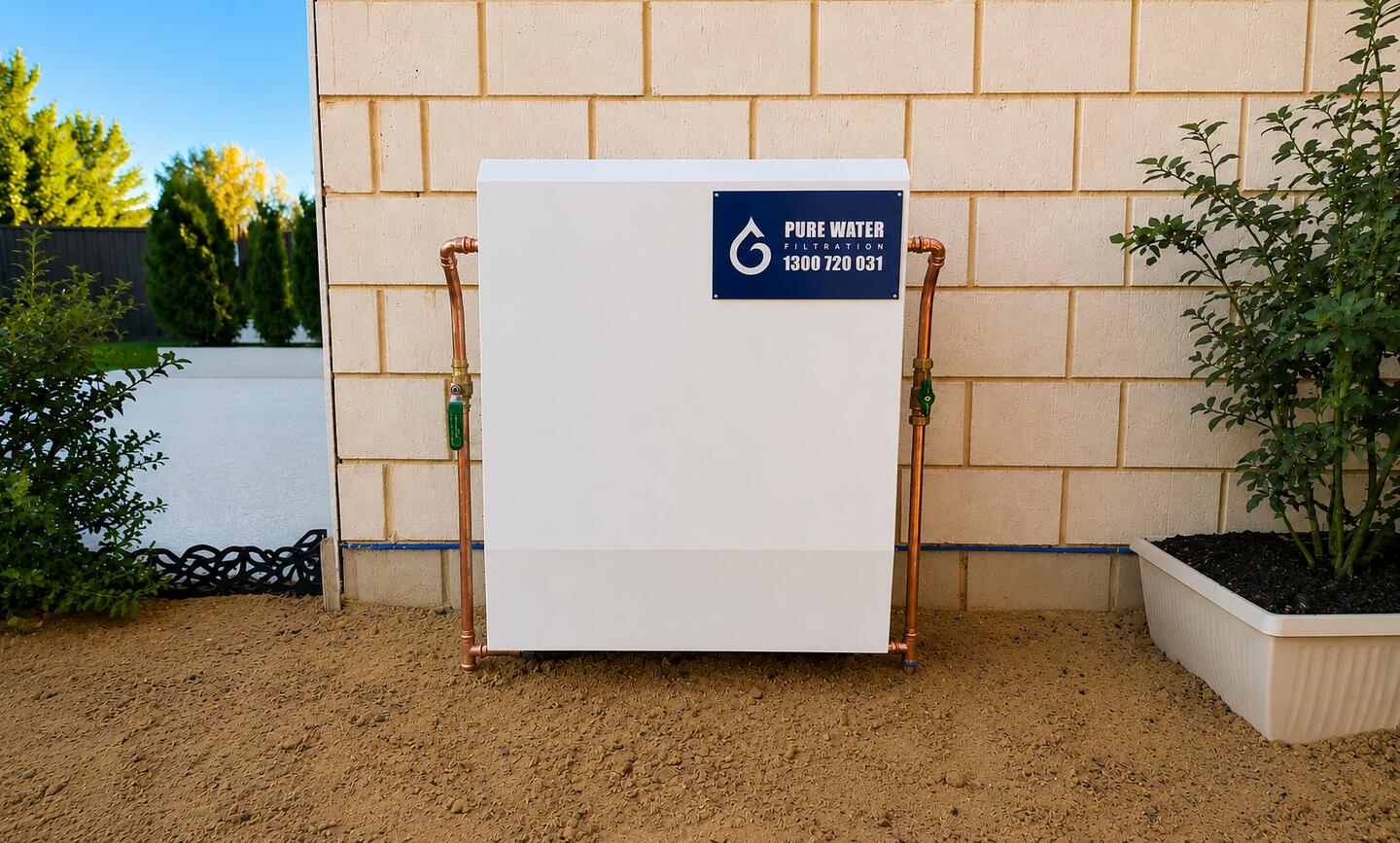
A whole-house filter is plumbed into the mains line, almost always near where the water enters your home. In Western Australia that's typically a tap point near the water meter or against an external wall on the side of the house. The system is installed inline, meaning water can't reach the rest of your plumbing without passing through it first.
That positioning is the whole point. It means a single piece of equipment can change the water quality at every fixture in the house, which is a very different proposition from an under-sink filter that only treats one kitchen tap.
The three core stages
Most whole-house systems use a sequence of three filtration stages. Each one targets a different category of impurity, and they're arranged so the cheapest and most aggressive filters protect the more expensive and more delicate ones downstream.
Stage 1: Sediment filtration
The first cartridge is a pleated or wound sediment filter, typically rated to capture particles down to about 5 microns. Its job is to catch the visible stuff: rust flakes, sand, sediment kicked up by mains works in the street, fine grit from your hot water cylinder. By trapping these particles up front, the sediment stage protects the carbon filter behind it from clogging prematurely.
Stage 2: Carbon block filtration
The second stage is usually a carbon block, often with a sub-micron rating. This is the filter doing most of the taste, smell and chemistry work. Activated carbon is enormously porous and chemically grabs hold of chlorine, chloramines, dissolved organics, pesticide residues and many disinfection by-products. This is the stage that's responsible for the noticeable drop in chlorine smell when you turn on a tap or step into the shower.
Stage 3: Polishing or specialty stage
The final stage is a second carbon polish. With the sediment and heavy chemical work already done by the first two stages, this cartridge gives the water extra contact time with activated carbon, catching any remaining traces of chlorine, odour and dissolved organics. It's the stage that takes the water from "filtered" to genuinely crisp and clean-tasting at every tap in the house.
Not sure which stages your home actually needs?
What gets removed, and what doesn't
A standard three-stage whole-house system reliably reduces:
- Chlorine and chloramines used by Australian water utilities
- Sediment, rust and visible particulates
- The chemical taste and pool-water smell at the tap
- Many disinfection by-products such as trihalomethanes
- Pesticide and herbicide residues caught by activated carbon
What a standard whole-house system doesn't usually do is remove dissolved minerals like calcium and magnesium that cause limescale, eliminate every trace of fluoride, or strip out heavy metals to ultra-low levels. If those are concerns for your household, the system can be configured with the right specialty stages added on, or paired with an under-sink reverse osmosis unit at the kitchen tap for drinking water.
What you'll actually notice at home
People often expect the difference to be subtle. It usually isn't. Within a few days of installation you'll typically notice:
- The chlorine smell is gone in the shower
- Skin feels less dry and itchy after bathing
- Hair feels softer, particularly noticeable for anyone with long hair
- Drinking water tastes cleaner without an aftertaste
- Kettles and shower screens collect less film over time
- Bath toys and grout stay cleaner
Customers who switch from bottled water to filtered mains water often comment that the kitchen tap finally tastes the way they always wanted it to.
Maintenance, lifespan and what it costs to keep running
A whole-house system is a set-and-forget piece of equipment for most of its life. The filter cartridges inside need replacing every 6 to 12 months depending on your water usage and local conditions. The housings, fittings and mounting bracket are designed to last many years. Most failures we see aren't with the system itself — they're with old cartridges that should have been swapped a year ago.
That's why we built the Filter Care Plan. Replacement filters are delivered to your door on schedule, and the system is covered by a lifetime warranty when the plan is active.
Servicing Australia-Wide
We design and install systems for households right across the country. Local water varies, so every system is matched to your area.
- Perth WA
- Mandurah
- Bunbury
- Kalgoorlie
- Adelaide SA
- Melbourne VIC
- Sydney NSW
- Brisbane QLD
- Darwin NT
- Hobart TAS
Is it the right system for your home?
Whole-house filtration makes sense if you want consistent water quality at every tap, especially if anyone in the household has sensitive skin, the kids end up in the bath every night, or you're tired of chlorine-smelling showers. It's also the right call if you're on bore water, rainwater or a property where the mains supply has a strong chemical character.
If you only care about drinking water and the rest of the house is fine, an under-sink filter at the kitchen tap may be a better fit. We've written a separate guide on that decision comparing whole-house and under-sink systems if you want to dig deeper.
Either way, the right starting point is a quick water-quality conversation. We service homes across Australia and we'll match the right stages to whatever's coming out of your tap.
Next Step
Ready to Feel the Difference in Your Water?
Better water for your family is just one quick conversation away…