Education
Reverse Osmosis Water Filters Explained: Pros, Cons, Costs & Maintenance
Reverse osmosis is the gold standard for drinking water, but it's not the right answer for every household. Here's how it works, what it costs, and when it's worth the upgrade.
Reverse osmosis is the most thorough drinking water filtration technology you can install in a residential kitchen. It produces water that is, by every meaningful measure, cleaner than what comes out of a bottle from the supermarket — typically for a fraction of the long-run cost.
That doesn't automatically mean reverse osmosis is the right answer for your household. Here's how the technology actually works, what it's great at, where it falls short, and what owning one looks like day to day.
How reverse osmosis works
Standard filtration uses physical or chemical barriers to trap contaminants. Sediment filters catch particles by size. Carbon filters use a porous structure and electrostatic attraction to grab chemicals like chlorine.
Reverse osmosis works on a different principle. Water is pushed under pressure through a semi-permeable membrane with pores so small that water molecules can pass through but almost nothing else can. Dissolved salts, heavy metals, fluoride, nitrates, pesticides and most other contaminants are physically excluded and flushed away to drain.
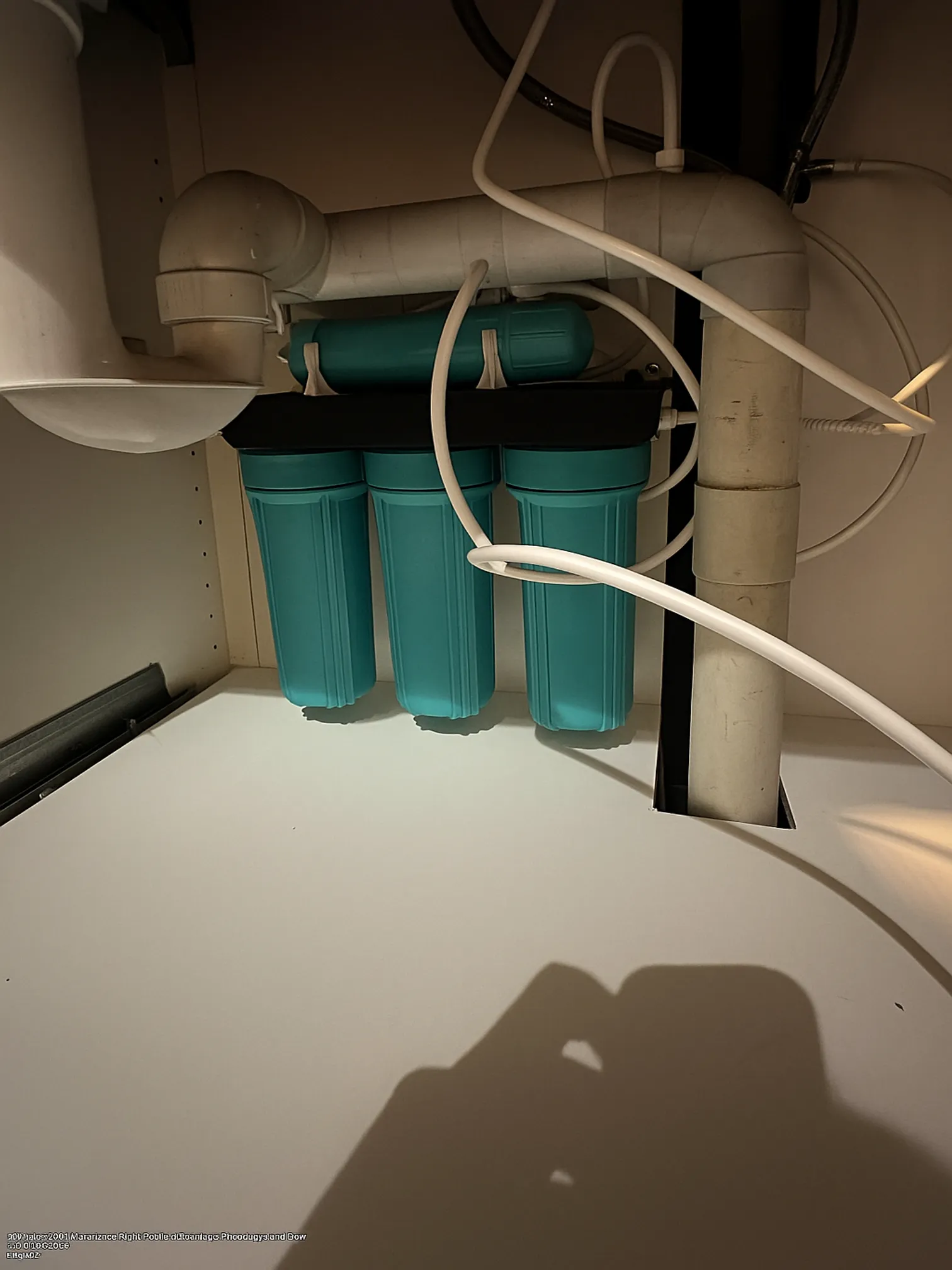
In a typical under-sink RO unit the water passes through:
- A sediment pre-filter to catch particulates
- One or two carbon pre-filters to remove chlorine (chlorine damages the membrane)
- The RO membrane itself, where the heavy lifting happens
- A storage tank that holds the filtered water ready to use
- A polishing carbon post-filter on the way to the tap
The result is water that's often more than 95% lower in dissolved solids than the mains supply going in.
What reverse osmosis removes
An RO system reduces a longer list of contaminants than any other point-of-use filter on the market. That includes:
- Dissolved salts and minerals (very high reduction)
- Fluoride
- Lead, copper, arsenic and other heavy metals
- Nitrates and nitrites
- PFAS and many other emerging contaminants
- Pesticide and herbicide residues
- Pharmaceutical residues
- Chlorine, chloramines and most chemical tastes
If you want the most thorough drinking water possible from a residential system, reverse osmosis is what gets you there.
Want to know if RO is the right fit for your home?
The trade-offs you should know about
RO isn't magic. There are three real considerations every honest installer should walk you through.
1. It wastes some water
Modern RO units produce roughly 1 litre of filtered water for every 3 to 4 litres they put through. The rest is flushed to drain along with the rejected contaminants. Newer membranes are dramatically more efficient than older designs, but RO will always produce some waste water by design.
2. It removes beneficial minerals
Because RO is non-selective, it strips out calcium and magnesium along with the things you wanted to remove. Some people find the water tastes flatter without minerals. We can fit a remineralisation stage if that matters to your household, which adds a small amount of calcium back for taste.
3. It needs the right water going in
RO membranes are damaged by chlorine, which is why every RO system needs carbon pre-filters in front of it. They're also stressed by very hard or very high-TDS water. On a tough bore supply we sometimes recommend a softener or whole-house pre-treatment to extend membrane life.
What does an RO system cost to own?
The upfront cost of a quality residential RO unit, supplied and installed, is comparable to a few months of bottled water for the average family. The system pays for itself surprisingly quickly when you stop buying bottles.
Ongoing costs are straightforward. The carbon pre-filters and sediment filter are typically replaced annually. The RO membrane lasts several years before it needs replacing. Our Filter Care Plan handles delivery on schedule and includes a lifetime warranty when active. That removes the only real maintenance hassle of owning an RO system.
And if the upfront cost is a concern, our Interest Free Payment Plan through Humm starts at $0 upfront with terms from 6 to 36 months.
Is RO worth it?
RO is worth it for households where any of these are true:
- You want bottled-quality drinking water and want to stop buying bottles
- You're on bore water with elevated TDS, fluoride or other dissolved contaminants
- You want fluoride removed from drinking water
- You have specific health concerns about heavy metals or emerging contaminants
- You make a lot of coffee or tea and you can taste the difference filtered water makes
If your only complaint is the chlorine taste in mains water, a simpler multi-stage carbon under-sink filter usually delivers a great result for less money. The decision really comes down to how pure you want the water and what's in your local supply.
Servicing Australia-Wide
We design and install systems for households right across the country. Local water varies, so every system is matched to your area.
- Perth WA
- Mandurah
- Bunbury
- Kalgoorlie
- Adelaide SA
- Melbourne VIC
- Sydney NSW
- Brisbane QLD
- Darwin NT
- Hobart TAS
What to do next
Every household's answer is a bit different and depends on your water, your usage and what you want from the system. The fastest way to figure out whether RO is the right fit is a quick conversation with a specialist who can look at your local water quality data. It's a free chat with no pressure either way, and we install across Australia.
Next Step
Ready to Feel the Difference in Your Water?
Better water for your family is just one quick conversation away…